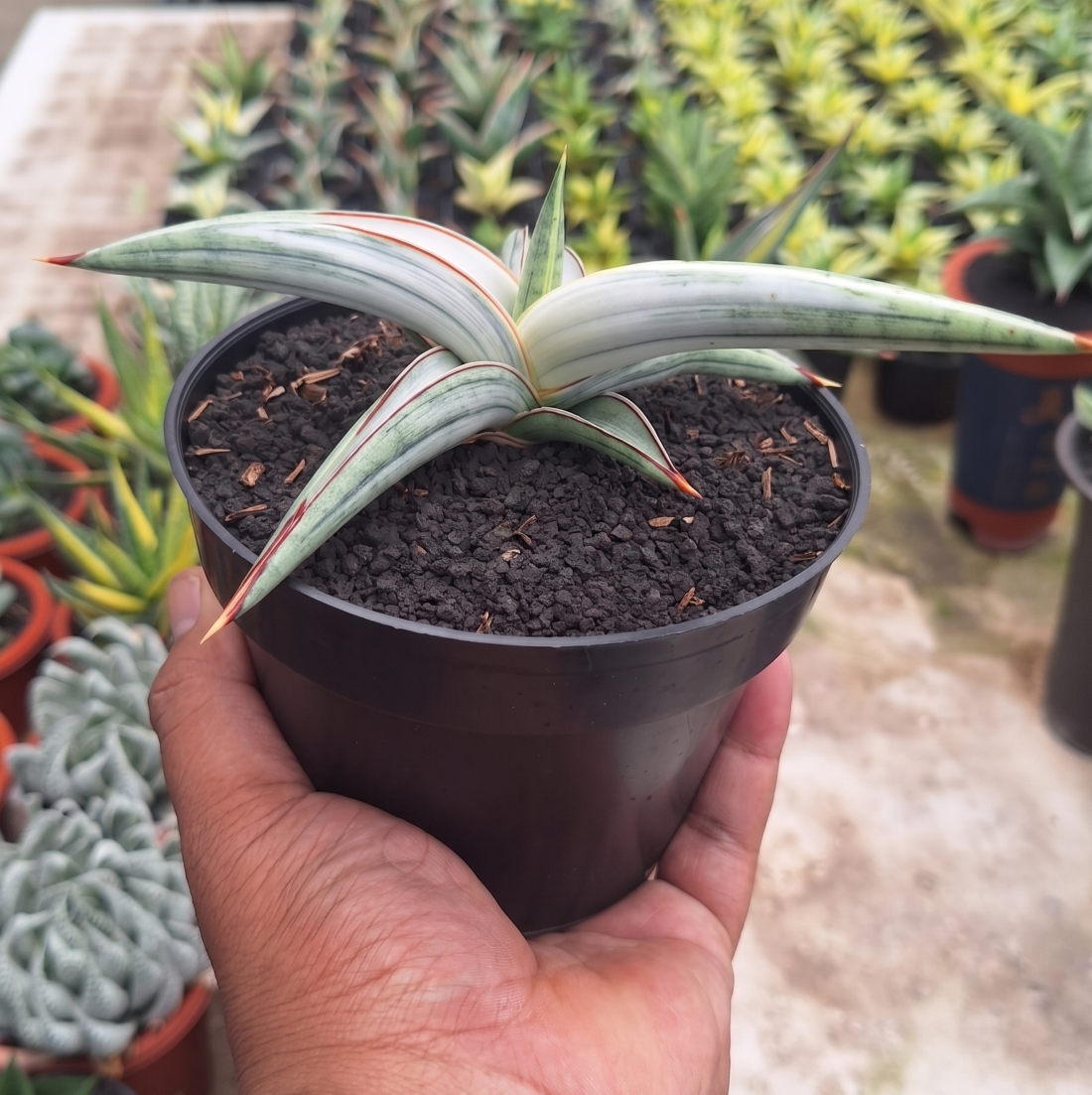


Sansevieria Trifasciata Wendy’s 10 cm Elevates Your Desk with Golden Elegance
NAWAPLANT.COM — Among the massive world of tropical houseplants, the Snake Plant (historically known as Sansevieria, now taxonomically reclassified under Dracaena) stands out as an absolute titan of durability and architectural beauty.
However, while common tall varieties like Dracaena trifasciata ‘Laurentii’ dominate modern office lobbies, a quiet revolution has been happening on windowsills and study desks.
Enter the Sansevieria Trifasciata ‘Wendy’s’ (frequently traded as Golden Wendy), especially when housed in a compact 10 cm pot.
This miniature cultivar packs a massive aesthetic and botanical punch despite its diminutive size. Below, we dive deep into the fascinating science, visual distinction, and exceptional benefits of incorporating this striking succulent into your indoor plant collection.
Botanical Profile & Visual Distinction
The ‘Wendy’s’ cultivar is a beautiful example of a compact, rosette-forming snake plant, often reminiscent of the classic Hahnii (or bird’s nest) varieties but with highly distinct, premium variegation patterns.
Sansevieria Trifasciata 'Wendy's' (10 cm Pot)
 ├── Form: Low-profile, architectural rosette ("Bird's Nest" structure)
 ├── Foliage: Thick, succulent leaves curving outwards
 ├── Primary Colors: Soft lime green, creamy white, and vivid golden-yellow
 └── Root System: Shallow, rhizomatous (thrives in tight spaces)
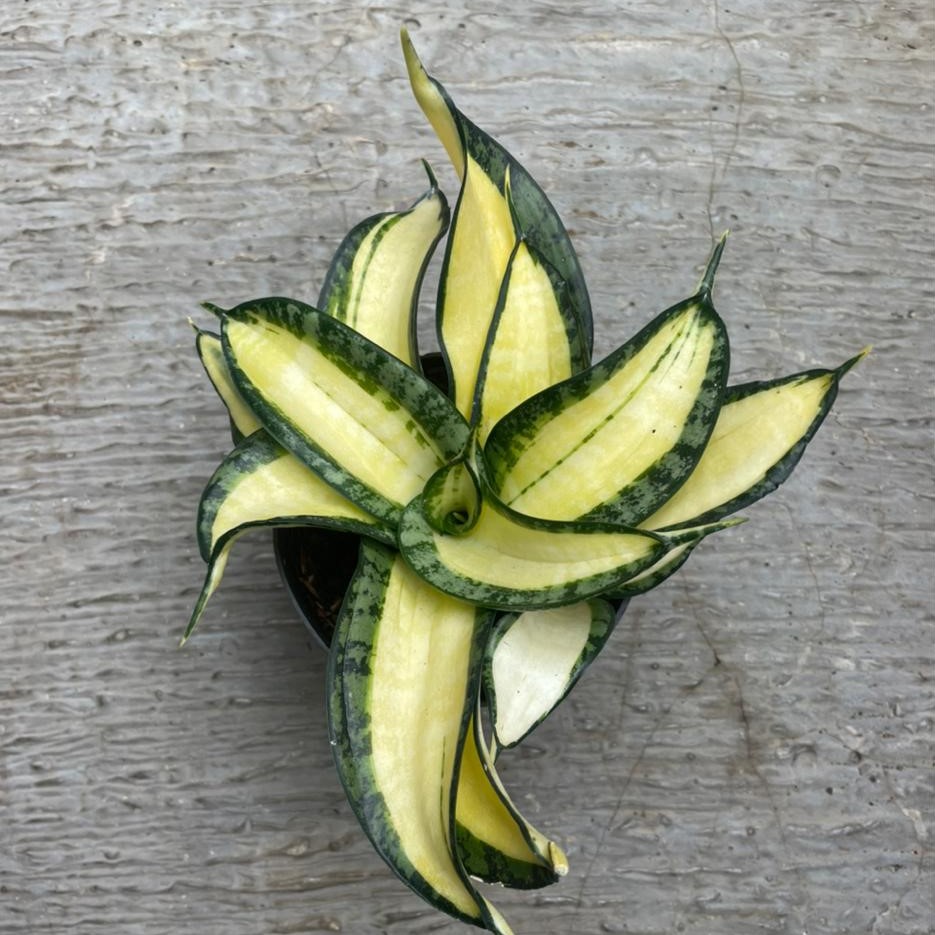
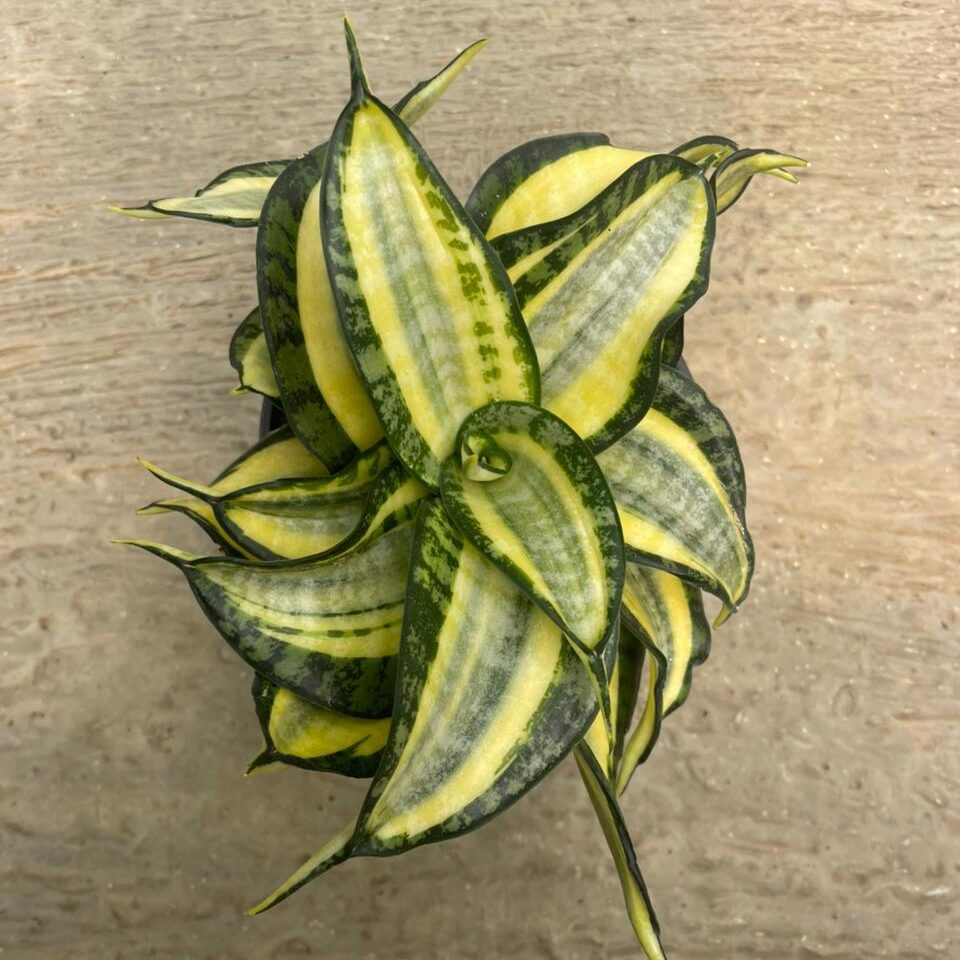
Unlike its taller cousins that shoot upright like sharp swords, ‘Wendy’s’ grows outward in a beautifully organized swirl. The leaves are thick, fleshy, and curve slightly outwards, mimicking a small, exploding green-and-gold star.
The real magic of the ‘Wendy’s’ cultivar lies in its dramatic, high-contrast variegation. The center of each leaf features a deep, mottled olive or lime green hue, which is dramatically bordered by bands of creamy ivory and bright, neon-tinged yellow.
When nestled tightly into a standard 10 cm starter pot, this precise, geometric symmetry is amplified, turning a living plant into a living piece of desktop sculpture.
Why the 10 cm Pot Size is a Design Game-Changer
In indoor gardening, size matters, but bigger isn’t always better. Cultivating Sansevieria ‘Wendy’s’ in a 10 cm pot offers distinct practical and aesthetic advantages:
-
Rhizome Compression and Health: Snake plants are rhizomatous succulents that spread via underground stems called rhizomes. They absolutely thrive when their root systems are slightly crowded. A 10 cm pot provides the perfect amount of soil compression, reducing the risk of water logging and encouraging the plant to channel its energy into producing vibrant, variegated leaf growth rather than massive root webs.
-
Ultimate Versatility in Spatial Design: A 10 cm pot takes up minimal visual and physical footprint. It sits comfortably on minimalist floating shelves, narrow window ledges, nightstands, and crowded office desks right next to your computer screen without cluttering your workspace.
-
Striking Geometric Contrast: The juxtaposition of an architectural, exploding golden rosette bursting out of a small 10 cm ceramic, terracotta, or concrete vessel creates an effortless boho-chic or modern industrial focal point.
Core Advantages & Hidden Superpowers
Beyond its high-end visual appeal, Sansevieria Trifasciata ‘Wendy’s’ is packed with biological advantages that make it a superior indoor plant choice.
1. Nocturnal Oxygen Production (CAM Photosynthesis)
Most plants absorb carbon dioxide CO2 and release oxygen during the day via standard photosynthesis. However, Sansevieria utilizes a highly specialized adaptation known as Crassulacean Acid Metabolism (CAM). Because these plants evolved in arid, punishing climates, they keep their microscopic leaf pores, called stomata, tightly closed during the hot daytime hours to prevent water evaporation.
Instead, they open their stomata at night, absorbing CO2 and releasing clean, fresh oxygen while you sleep. This unique nocturnal behavior makes a 10 cm pot of ‘Wendy’s’ the absolute perfect organic addition to a bedside nightstand.
2. Natural Built-In Air Purifier
Immortalized by NASA’s landmark Clean Air Study, plants in the Sansevieria trifasciata family are biological filters. Their thick leaves are capable of absorbing trace amounts of airborne toxins commonly found in household environments, including:
-
Formaldehyde emitted by carpets, plywood, and adhesives
-
Benzene found in plastics, synthetic fibers, and detergents
-
Xylene and Toluene frequently found in indoor paints and printing inks
While a single mini pot will not replace a mechanical HEPA filter, having a collection of these small, highly efficient plants actively contributes to a cleaner, safer breathing microclimate around your direct workstation.
3. Unrivaled Structural Neglect Tolerance
If you have a history of accidentally killing houseplants due to a busy lifestyle or simple forgetfulness, the ‘Wendy’s’ snake plant is your ultimate botanical ally. Thanks to its thick, wax-coated cuticles and internal water-storing tissues, this plant behaves much like a desert cactus.
It can easily survive weeks without water, laughs off low-humidity air caused by indoor air conditioners or heaters, and handles ambient room temperature fluctuations ranging from 15°C to nearly 30°C with ease.
Masterclass Care Protocol for a 10 cm ‘Wendy’s’
To maintain the pristine, bright yellow variegation of your ‘Wendy’s’ without triggering root issues, follow this straightforward care formula:
-
Optimal Lighting: Bright, indirect sunlight is best to maintain the vivid gold colors. The plant can tolerate low light, but the yellow bands may fade to a dull green. Avoid harsh, burning direct midday sun.
-
Watering Frequency: Treat it like a succulent. Water only when the potting medium is 100% dry. In typical indoor settings, this means watering once every 2 to 3 weeks.
-
Soil Medium: Use a highly porous, loose, and well-draining substrate. A dedicated cactus or succulent mix amended with perlite or pumice works best to ensure quick water evacuation.
-
Watering Technique: This step is crucial. Pour water directly onto the soil at the base of the plant. Never pour water into the center of the rosette, as trapped moisture will rapidly cause deadly crown rot.
The Sansevieria Trifasciata ‘Wendy’s’ in a 10 cm pot is the quintessential modern houseplant. It effortlessly bridges the gap between biological utility and elite interior styling.
By providing clean nighttime air, surviving on absolute minimal intervention, and introducing a brilliant pop of metallic, golden architectural energy into your room, this pint-sized succulent proves that true luxury often comes in small, exceptionally resilient packages.
You might also like